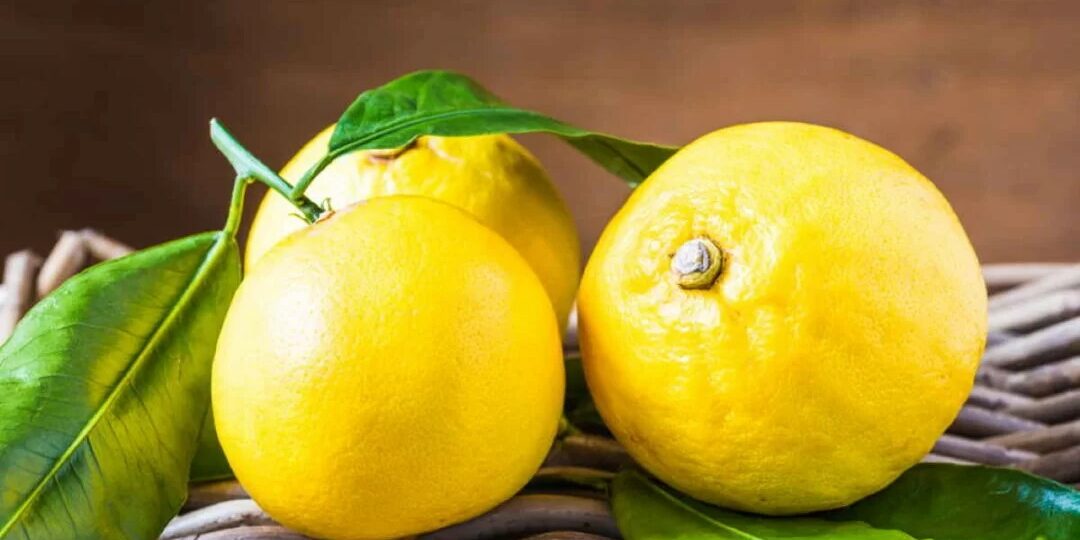
Earl Grey is the best-selling flavoured tea in the world, and it owes its scent to a single ingredient: bergamot essence. A citrus fruit that grows almost exclusively along about a hundred kilometres of Ionian coastline in the province of Reggio Calabria, which supplies roughly 90% of the world’s essential oil. And yet, in most of the cups drunk every day around the world, there is no trace of that bergamot.
A story that begins with a fraud
The best-known legend has a Chinese mandarin presenting the blend to Charles Grey, British prime minister in the 1830s, in gratitude for saving his son. It is a charming story and almost certainly false: Lord Grey never travelled to China, and at the time bergamot in tea was unknown there.
The records tell something less romantic. The earliest known reference to tea flavoured with bergamot dates from 1824. In 1837 an English company ended up in court on a specific charge: it was secretly adding bergamot to pass off ordinary tea as a superior product and sell it at a higher price. The name “Earl Grey” came much later — in the 1850s and 1860s people spoke of “Grey’s tea”, and the first advertisements using the name we know today appeared in London in the 1880s, well after the Earl’s death.
There is an irony worth noting. Bergamot entered the history of tea as an instrument of adulteration: it was there to mask a poor leaf. Today the adulteration runs the other way, at bergamot’s expense: tea is sold as “bergamot flavoured” when there is no bergamot in it.
How tea is actually scented
There are essentially two methods. The first, and by far the most common, is to spray the essence onto the finished dried black tea leaves and tumble them so it is evenly distributed. The second is to add pieces of dried rind to the blend, which release their scent during brewing: the result is gentler and less immediate.
Either way, the quantities involved are tiny: a few grams of essence are enough to flavour kilos of leaf. That detail explains a great deal. When the ingredient that gives a product its character weighs less than one per cent, there is nothing to hide behind: if the essence is flat, the cup is flat. And since it accounts for very little of the finished product’s cost, choosing to economise precisely there is almost always an industrial decision rather than a necessity.
Real essence versus synthetic flavouring
Bergamot essence cold-pressed from the peel is a complex mixture: hundreds of volatile compounds, dominated by linalyl acetate, linalool and limonene, plus dozens of minor molecules present only in traces. Those traces are exactly what gives real essence its movement: the sharp citrus opening, the slightly bitter green base, the way the scent shifts as the cup cools.
Synthetic bergamot flavouring is almost always built around linalyl acetate, the most characteristic molecule, with a few others alongside it. But linalyl acetate does not need bergamot to exist: it can be synthesised, or obtained from far cheaper sources such as pine oil or lavender. The result is recognisable — the scent resembles bergamot — but it has only one dimension: intense at the start, identical to itself all the way through, and in some cases carrying that soapy note tea drinkers know well. It is also why so many Earl Greys from different brands taste exactly the same.
The reason for the substitution is cost. One litre of real essence takes around 200 kilos of fruit, hand-picked between November and March on a very small patch of the planet. A synthetic flavouring costs a fraction, is available all year round and does not vary from one harvest to the next. We have described how you get from 200 kilos of fruit to one litre of oil in another article.
How to read the label
This is the practical part, and it applies both to someone buying a box of tea in a supermarket and to someone choosing a supplier. In Europe the naming of flavourings is governed by Regulation (EC) 1334/2008, and the wording on the label has a precise meaning:
- “Bergamot essential oil” or “bergamot extract” — it is bergamot, declared as an ingredient.
- “Natural bergamot flavouring” — at least 95% of the flavouring component must come from bergamot. The remaining 5% may only be used to standardise or adjust a note.
- “Natural bergamot flavouring with other natural flavourings” — only part of it comes from bergamot, and that part can be small.
- “Flavouring” or “natural flavouring”, with no mention of bergamot — nothing guarantees a single drop of bergamot. The note can be built entirely from something else.
Two further checks cost nothing. The first is price: real essence adds little to the cost of a box, but a flavoured tea sold at a few cents a bag is unlikely to contain it. The second is origin: a producer using Reggio Calabria bergamot usually says so, because it is a selling point. When it is not stated, it is often because it cannot be.
What tea producers ask for
Buyers who need essence for food and beverages work differently from the fragrance industry. The requirements are almost always the same:
- Food suitability. The essence must be usable as a food flavouring under Regulation (EC) 1334/2008, with the paperwork to prove it.
- Complete documentation for every lot. Safety data sheet, certificate of analysis, allergen and GMO statements, traceability of origin.
- The right type of essence. There is no such thing as “bergamot essence” full stop: there is whole essence, organic, bergaptene free (furocoumarin free) and terpeneless — deterpenated, more concentrated, more soluble and less prone to oxidation, all of which matter in a beverage.
- Consistency. A company putting a blend on the market has to find the same profile again next year. It is the hardest requirement to meet, because bergamot is an agricultural product and every season is different.
- Analytical values within the expected ranges, usually those of the ISO 3520 standard for Italian bergamot essential oil.
What supplying tea companies taught us
We have supplied bergamot essence to companies producing flavoured tea, and those relationships teach you a lot about how this market works. The first thing that strikes you is how little the conversation is about scent and how much it is about paperwork: before even assessing a sample, a food company wants to know whether the documentation is in order, whether the lot is traceable, and whether the supplier will be able to deliver the same quantities the following year.
The second is that the sample, when you finally get to it, settles everything in a matter of seconds. People who have worked with tea for years can tell real essence from a reconstructed flavouring simply by smelling it, and they do not need a gas chromatograph to do so: that comes afterwards, to put in writing what the nose has already worked out.
Why it is worth knowing
Bergamot is one of the most copied citrus fruits in the world: far more of it is sold than is produced. We have written about that in relation to counterfeiting, and tea is perhaps the case where substitution goes unnoticed most easily, because the consumer has nothing to compare it with: if you have never smelled a freshly cut bergamot, synthetic flavouring seems normal.
Producers who want real bergamot in the cup — from Reggio Calabria, cold-pressed from the peel — know it is a choice you can taste and a claim you can put on the label. Write to us if you would like to discuss it: we can supply the essence and the documentation you need to use it.